[
FEATURES
]
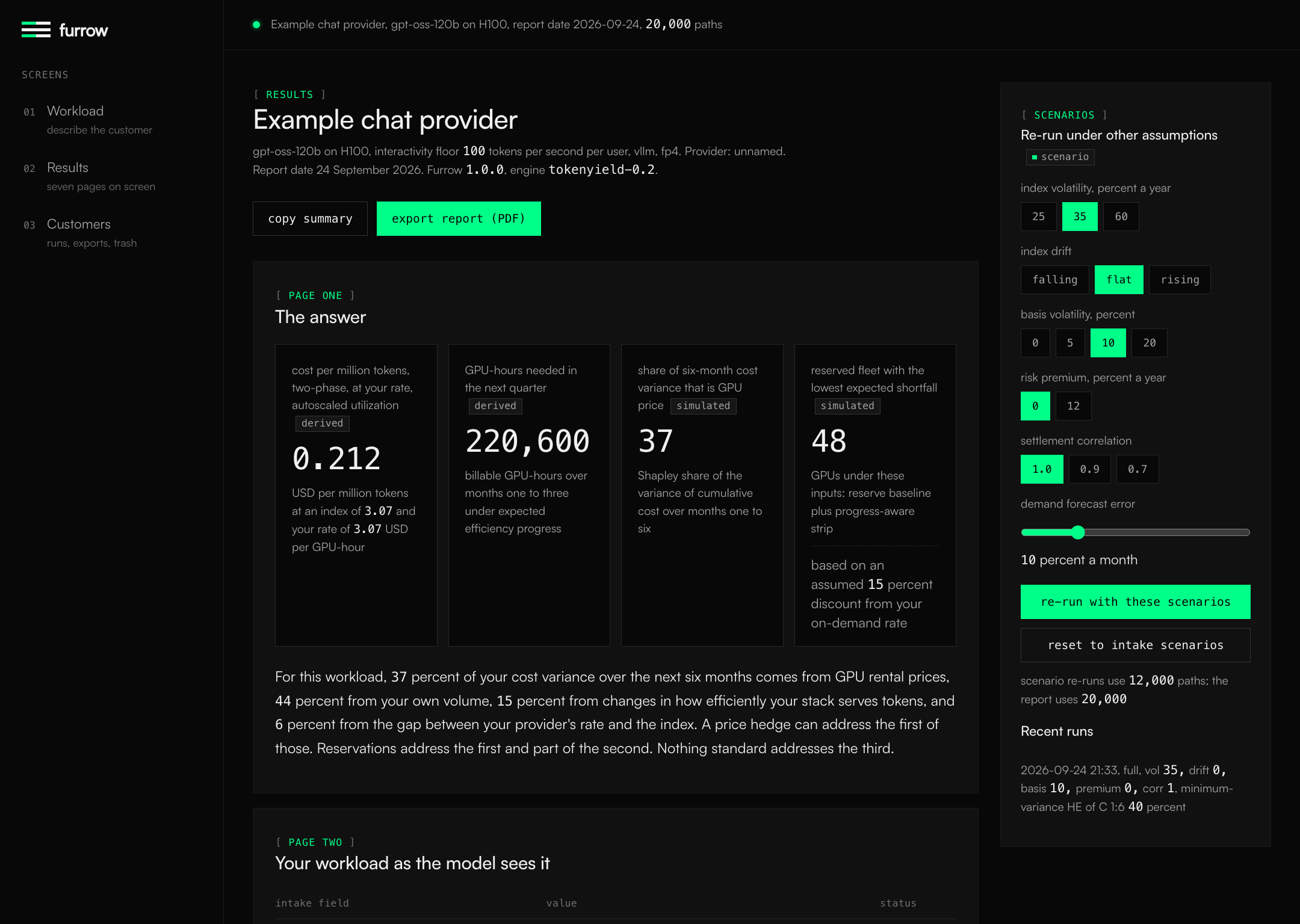
Four numbers. Every one of them tagged.
Two-phase cost
Prefill and decode, priced separately
A chat mix is 94 percent prompt tokens. A single 1k/1k benchmark overstates its cost by 59 percent. Furrow fits both yields and prices your mix.
Variance shares
Where the bill actually moves
Twenty thousand simulated futures, then a Shapley split of the cost variance across price, demand, yield and basis.
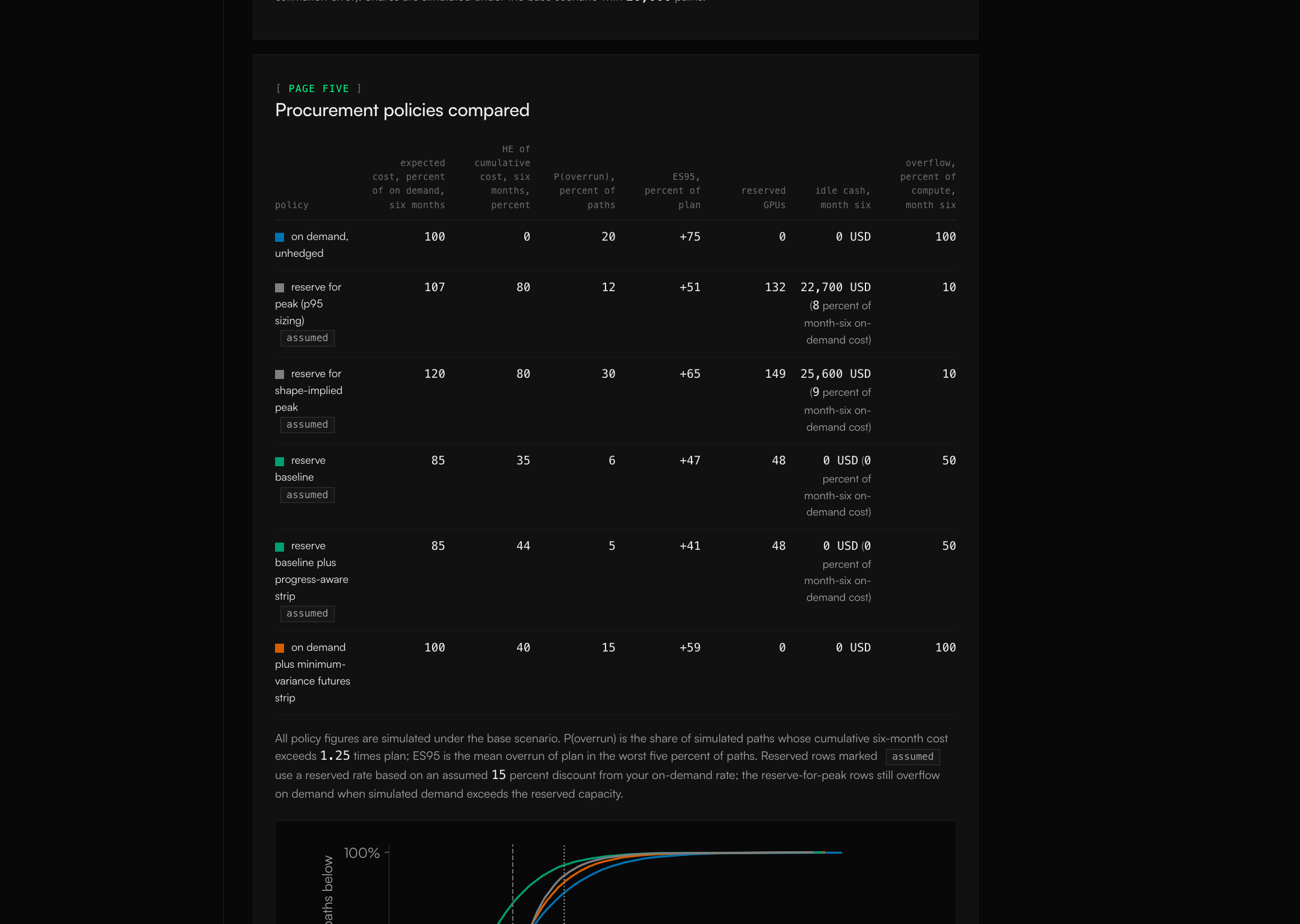
Procurement policies
Reserve, buy on demand, or hedge
Six policies on the same simulated paths: expected cost, variance removed, overrun probability, downside and idle capacity.
[
USE CASES
]
Every question the compute line gets asked. Furrow answers it.
Renew a contract
Plan capacity
Plan capacity
Price per token
Price per token
Right-size the reservation.
Enter your fleet, rate and months remaining. Furrow puts your contract beside the alternatives with idle capacity and overflow made explicit.
[
HOW IT WORKS
]
Three steps. Then read seven pages.
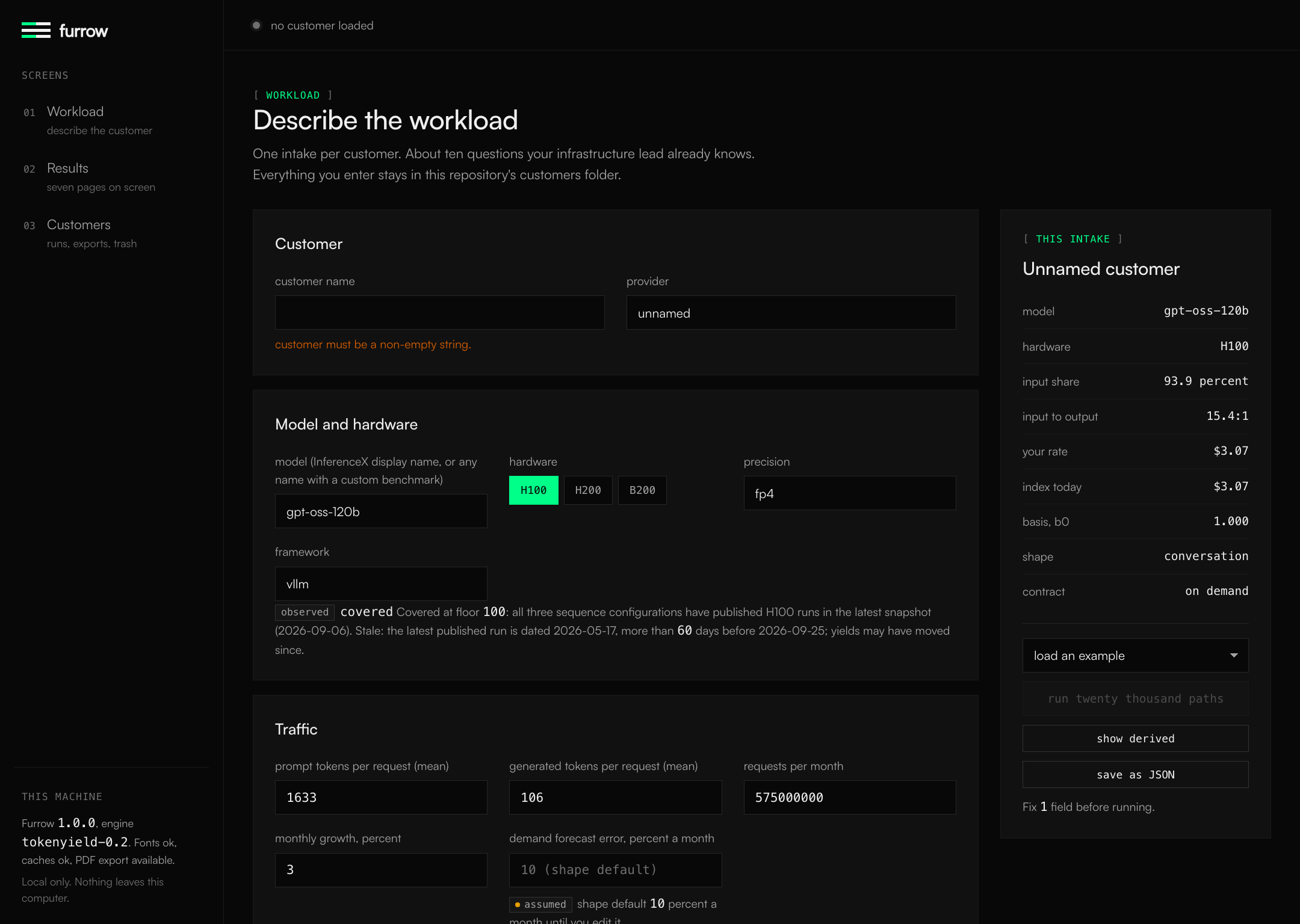
Describe the workload
About ten questions your infrastructure lead already knows: tokens per request, requests a month, latency floor, GPU, contract.
Furrow simulates
Twenty thousand futures for price, demand, yield and basis, calibrated to public benchmarks, index history and traffic traces. A few seconds on a laptop.
Read and hand over
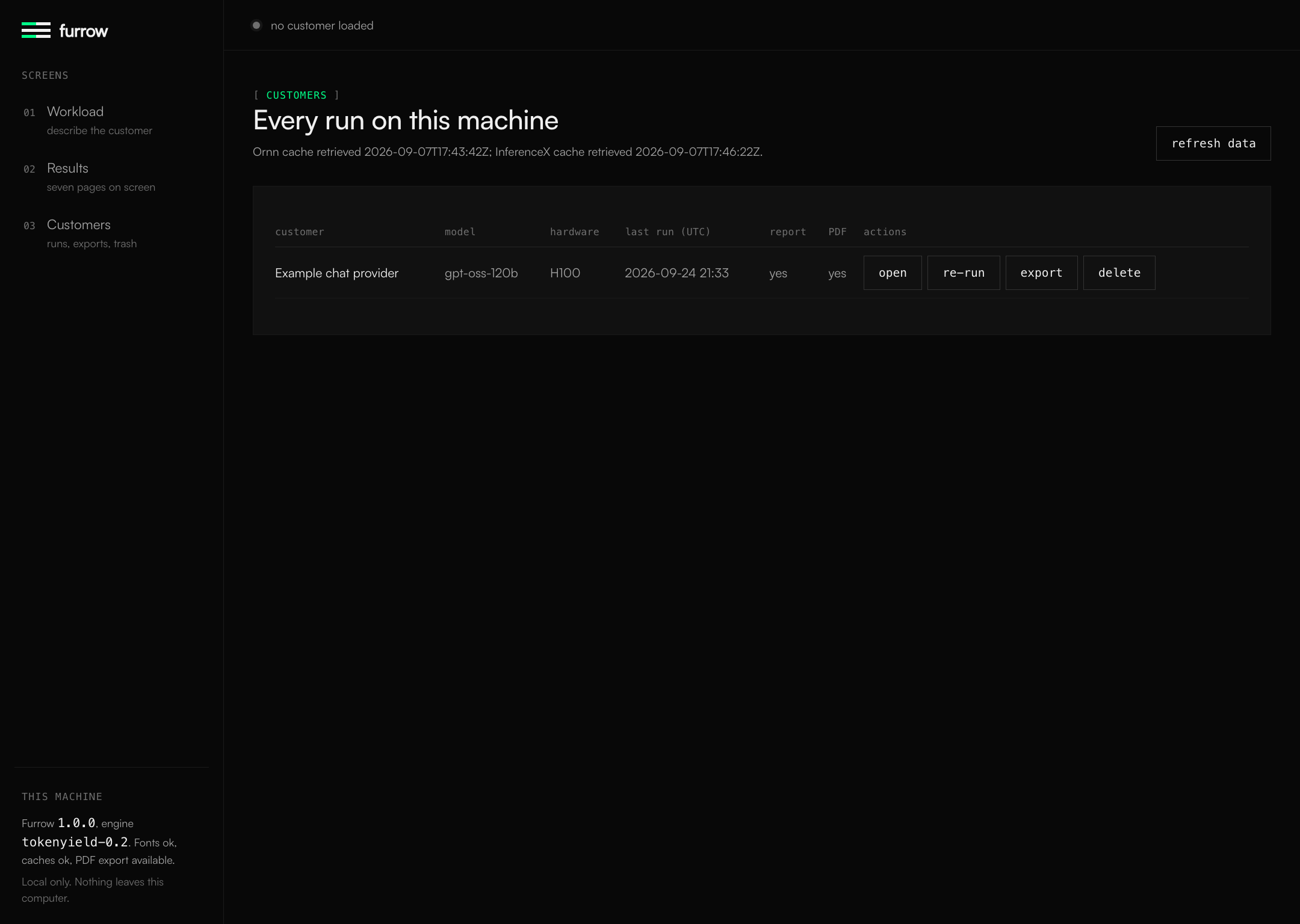
A seven-page report, every number tagged observed, derived, assumed, scenario or simulated. Print it to A4 or walk it on a call.
[
BENEFITS
]
Less guesswork. More numbers you can defend.
[
WORKLOADS
]
Five workloads. What the same engine says about each.
[
RESOURCES
]
Why this matters. In the words of the people building the market.
[
ACCESS
]
Three ways in. No fabricated prices.
[
FAQ
]
Built on public data from